
Beginning with Web3 Notes - Chapter 1 Q&A
Beginning with Web3 Notes Chapter 1 Questions and Answers
1.Reflect on how the internet has evolved from Web1 to Web2, and now to Web3. How have these changes impacted the way we communicate, access information, and perform transactions? What were the limitations of Web1 and Web2 that necessitated the evolution to Web3?
Answer:
Web1: A read-only internet where users could only consume static content. Limitations included a lack of interactivity and user-generated content.
Web2: A read-write internet enabling social media, dynamic websites, and user interactions. Limitations included centralized control, privacy concerns, and monopolization by big tech companies.
Web3: Introduces decentralization, user control, and blockchain technology. It enables trustless systems, greater transparency, and a peer-to-peer internet, addressing the flaws of centralization in Web2.
2.The principle of decentralization is fundamental to Web3. What are the benefits and potential challenges that come with decentralization? How does it change the dynamics of control and authority on the internet?
Answer:
Benefits: Enhanced transparency, reduced reliance on intermediaries, greater user control, and improved security.
Challenges: Scalability issues, higher energy consumption, regulatory uncertainties, and the need for user education.
Dynamics of Control: Decentralization shifts authority from centralized entities (like tech giants) to individuals and peer-to-peer networks.
3.How does Web3 address the issues of privacy and user control that are prevalent in the current internet model? What mechanisms does Web3 use to ensure user data is protected and users have control over their data?
Answer: Web3 uses cryptographic methods, decentralized identity systems, and blockchain technology to protect user data. Mechanisms like zero-knowledge proofs and encryption ensure privacy while giving users full control of their data.
4.What does the term trustless system mean in the context of Web3? Why are trustless systems important, and how do they facilitate transactions and interactions in the Web3 environment?
Answer: A trustless system operates without relying on intermediaries or centralized authorities. Instead, it uses blockchain and smart contracts to enable secure and transparent transactions. This ensures fairness, reduces costs, and removes single points of failure.
5.How does the user experience differ between Web2 and Web3? What are the potential benefits and challenges that users might face in the transition from Web2 to Web3?
Answer:
Benefits: Enhanced privacy, ownership of data, and financial inclusivity.
Challenges: Higher complexity, steep learning curve, and slower transaction speeds in some cases.
6.Why is blockchain considered a foundational technology for Web3? How does it contribute to the principles of decentralization, user control, and trustless systems?
Answer: Blockchain ensures immutability, transparency, and decentralized consensus. It enables trustless systems, where users can control their assets and data without intermediaries.
7.What are smart contracts, and why are they critical for the functioning of Web3? How do they contribute to the creation of decentralized applications?
Answer: Smart contracts are self-executing programs stored on the blockchain. They automate agreements, reduce costs, and enable decentralized applications by ensuring predefined rules are followed without intermediaries.
8.How do peer-to-peer networks contribute to the functionality and principles of Web3? What advantages and challenges do they present compared to traditional client-server networks?
Answer: Peer-to-peer networks enhance decentralization and resilience. They reduce reliance on centralized servers but face challenges like scalability, latency, and regulatory issues.
9.How do smart contracts and peer-to-peer networks interact in the Web3 environment? How does this interaction enable new types of applications and services?
Answer: Smart contracts automate processes, while peer-to-peer networks distribute resources and data. Together, they enable decentralized finance (DeFi), supply chain transparency, and more.
10.What are the scalability issues that blockchain networks currently face? How do these issues impact the potential adoption and functionality of Web3?
Answer: Scalability issues include slow transaction speeds and high energy consumption. These challenges hinder widespread adoption but are being addressed by solutions like layer-2 scaling and proof-of-stake systems.
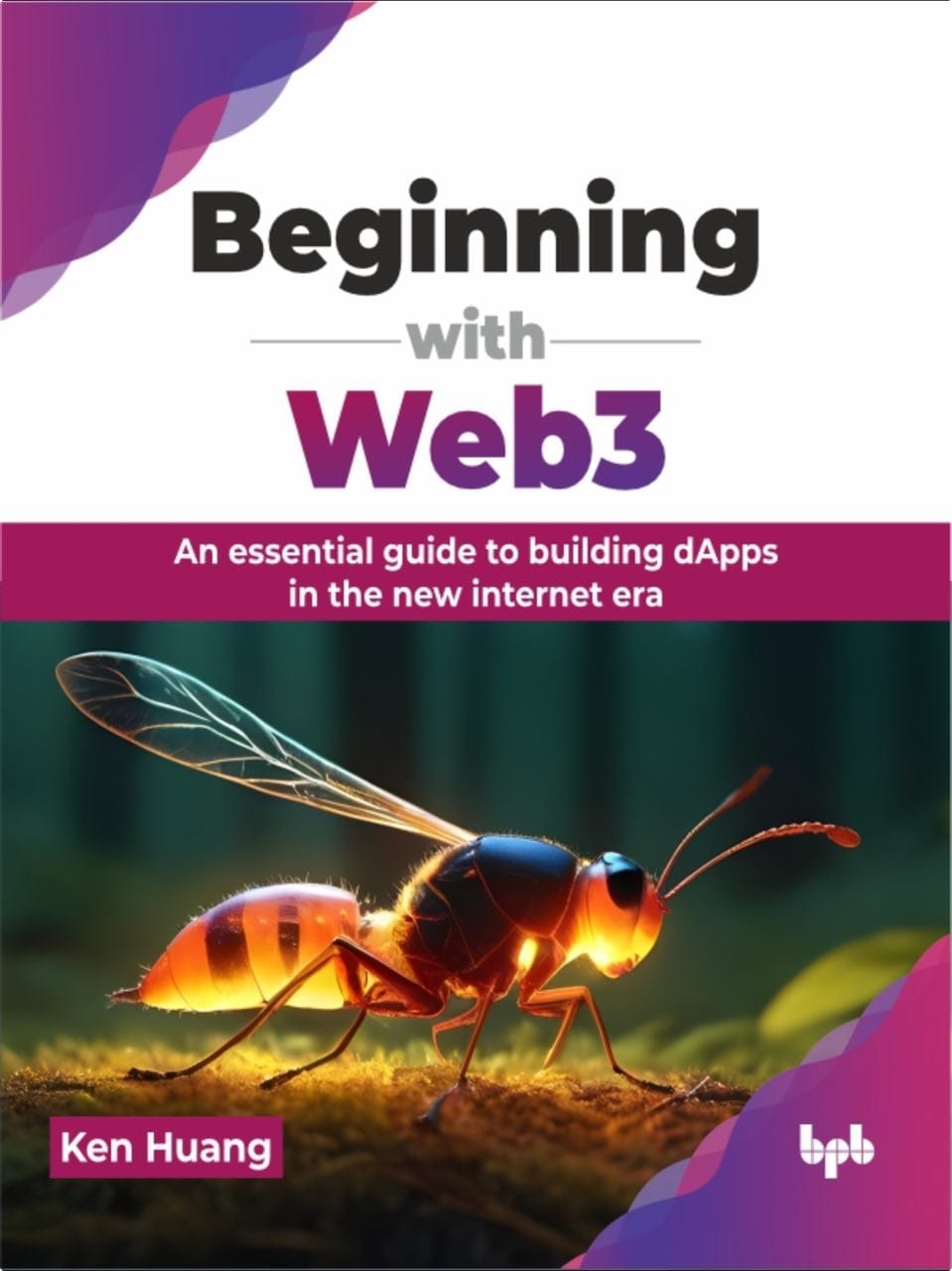
About the Author
Ken Huang is a globally recognized expert in Artificial Intelligence (AI) and Web3 technologies, with significant contributions to blockchain, decentralized systems, and AI governance. As the Chief Executive Officer of DistributedApps.AI, Ken leads efforts to advance AI and Web3 consulting and education. His professional journey is marked by leadership roles in prestigious organizations and impactful contributions to emerging technologies.has authored and served as the chief editor for eight books on Web3 and Generative AI, published by esteemed publishers such as Springer, Cambridge University Press, and John Wiley (Source: BPB Online). Order the Book : https://amzn.to/3WtYU2z
11.How does the operation of blockchain networks contribute to energy consumption? What are the implications of this, and are there any solutions being proposed?
Answer: Blockchain networks, especially those using Proof of Work (PoW), consume significant energy due to mining activities. This has environmental implications, leading to criticism of blockchain technology. Proposed solutions include migrating to Proof of Stake (PoS) and other energy-efficient consensus mechanisms, as well as integrating renewable energy sources.
12.Why is interoperability important in blockchain networks? What challenges does it present, and how can these be overcome?
Answer: Interoperability allows different blockchains to communicate and share data, enabling seamless interactions across networks. Challenges include technical incompatibilities and differing protocols. Solutions include cross-chain bridges, interoperability protocols (like Polkadot or Cosmos), and standardization efforts.
13.Although blockchain transactions are secure, they are also public. How does this affect data privacy, and what solutions exist to enhance privacy in blockchain transactions?
Answer: Public blockchains expose transaction details, raising privacy concerns. Solutions include privacy-focused protocols like zk-SNARKs, MimbleWimble, and confidential transactions, which encrypt data or minimize exposure while retaining transparency where needed.
14.What are the security concerns when using smart contracts in Web3? How can these concerns be addressed?
Answer: Smart contract vulnerabilities include coding errors, logic flaws, and exploits like reentrancy attacks. Addressing these concerns requires thorough auditing, formal verification, and adhering to best practices in secure development.
15.How do decentralized applications differ from traditional applications? What opportunities and challenges do they present?
Answer:
Opportunities: Increased transparency, reduced reliance on intermediaries, and better user control.
Challenges: Slower performance, scalability issues, and user onboarding difficulties due to complexity.
16.What is tokenization, and how does it contribute to the functionality of Web3? What new opportunities does tokenization create, and what challenges does it present?
Answer: Tokenization converts assets into digital tokens on a blockchain, enabling fractional ownership and global accessibility. Opportunities include democratizing investment and enhancing liquidity. Challenges include regulatory uncertainty and technological barriers.
17.What role do consensus mechanisms play in the operation of a blockchain network? How do different consensus mechanisms, like Proof of Work and Proof of Stake, affect the security, scalability, and energy consumption of the network?
Answer: Consensus mechanisms ensure agreement on the blockchain state. PoW prioritizes security but consumes more energy and scales poorly. PoS offers better scalability and energy efficiency but requires addressing centralization risks.
18.How does the decentralized and borderless nature of Web3 affect regulation and governance? What challenges does this present, and how might they be addressed?
Answer: Web3's decentralized nature complicates traditional regulatory frameworks. Challenges include jurisdictional ambiguity and compliance enforcement. Potential solutions include collaborative regulatory efforts, self-regulation, and hybrid models blending decentralization with compliance tools.
19.What role does cryptocurrency play in Web3? How do they contribute to the principles and functionality of Web3?
Answer: Cryptocurrencies enable decentralized finance, incentivize participation in networks, and support governance in Web3 ecosystems. They embody decentralization and facilitate trustless transactions.
20.Given the principles, technologies, opportunities, and challenges discussed in this chapter, how do you envision the future of Web3? What potential impacts could it have on society, economy, and individual lives?
Answer: The future of Web3 promises greater user empowerment, decentralized economies, and new financial models. It could reshape industries by reducing reliance on intermediaries, fostering global inclusivity, and enhancing data privacy. However, challenges like scalability, regulation, and adoption must be addressed to realize its full potential.
Answers aided by ChatGPT.
©2025 Pro Series Profits & CSA5Steps. All Rights Reserved.